
Mid project discovery ruins schedules. Test before renovations start and keep your project moving smoothly.



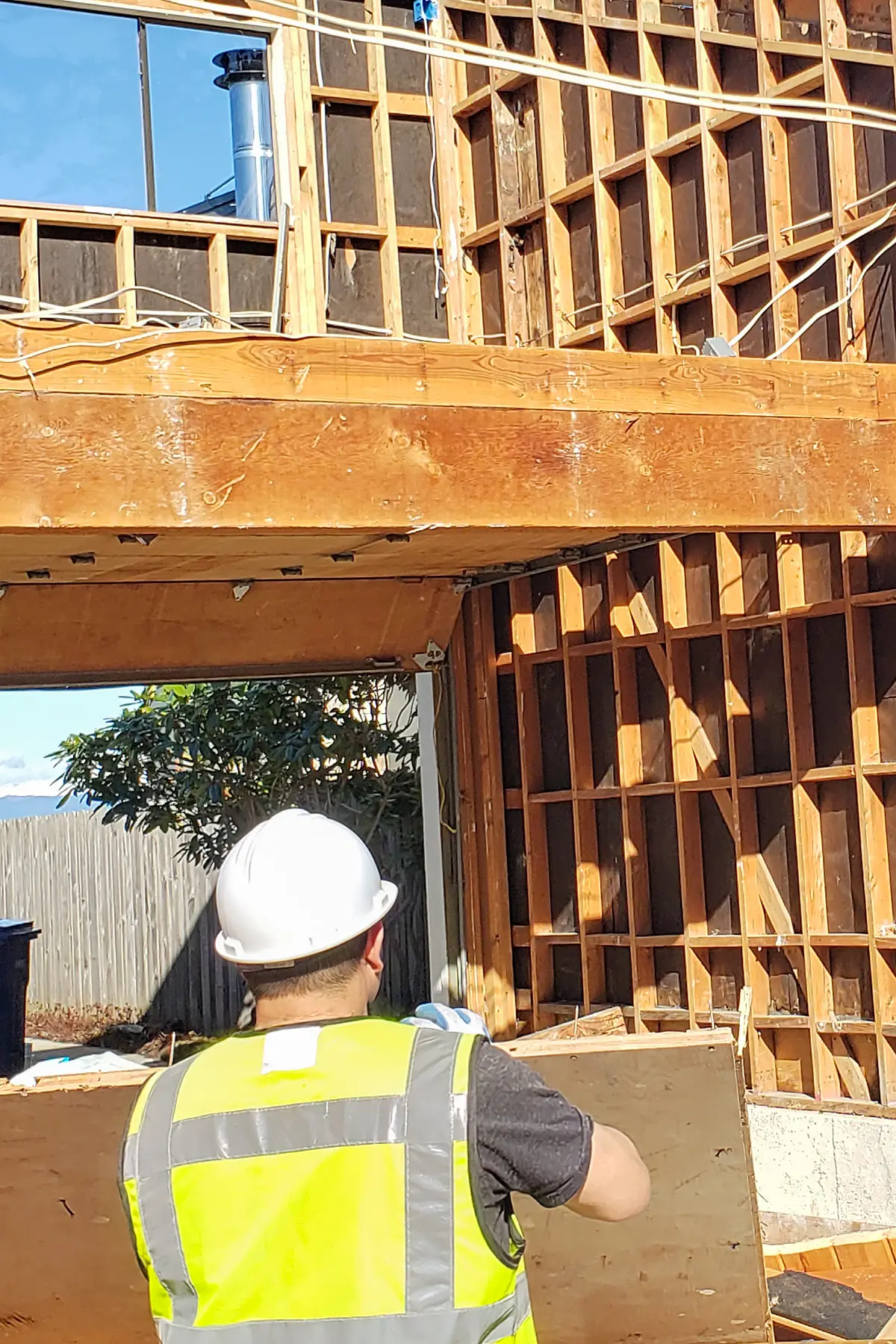
Certified inspectors
No guesswork, no wasted time. Here’s exactly what happens from the day you call to the day you get your report.
Book online or by phone. Paused jobs, time crunches, and repeat partners get priority scheduling.
A certified inspector walks the property, collects samples, maps and documents everything needed for your report.
Samples analyzed by an NVLAP-accredited lab. Results in 3 business days, or next business day if your project can't wait.
A documented report with everything you need to keep the job moving, or to submit to the permitting office for approval.
You want an inspector focused on your best interest, not the next job. Pick wrong, and you risk L&I violation tickets, a halted job site, and liability for both the contractor and homeowner. All it takes is one neighbor with a little knowledge of hazardous material rules to bring a compliance officer to your site. A proper survey is your first line of defense when that happens.
We’re a dedicated inspection company, not an abatement company. We don’t stand to gain from your materials testing positive. Our priority is protecting you, your crew, & your project.
A stalled job site costs you money every hour it sits idle. Paused projects or those with a time crunch get priority scheduling and rush results in as little as 24 hours. Our priority is keeping your project moving, not adding to the delay.
When an L&I compliance officer shows up, the first thing they ask for is the asbestos survey. Lack of a survey, or an improperly done one, and they can start writing $600/day fines on the spot. It goes up from there if other safety violations are present.
Straight answers to the questions we hear most from homeowners and contractors before a renovation starts.
If you own and live in the home you’re renovating, Washington regulation technically allows you to survey it yourself, as long as it’s not a demolition. In practice, almost nobody uses that option. Reputable contractors, including the crews from Home Depot, require an AHERA-certified inspector’s report before they’ll send their guys in. We’ve seen it happen more than once: a crew shows up, asks for the survey, finds out it was done by the homeowner, and reschedules on the spot. A self-survey doesn’t protect their company legally, since it wasn’t done by someone trained and accredited to perform it.
Please check the pricing guide above for the base rate and per-sample cost. As a general idea of scope:
The exact sample count is up to the AHERA-certified inspector’s judgment once they’re on-site. These are general guides, not a quote.
Washington L&I puts the requirement on the homeowner, building owner, or property manager acting as the owner’s agent to get a good faith inspection done and hand the results to the contractor before work starts. Assuming your contractor will handle it, or that it’s buried somewhere in their scope of work, is a common way projects end up started without one. Reputable contractors know the rule too and will ask you for it before they schedule the job.
Permit offices typically want this handled before they’ll sign off, when it applies. Most reputable contractors require it too, since it protects their crew and keeps your home from getting contaminated. Skip it, and the risk isn’t just a stalled project. It’s exposing your crew, your family, and your pets to asbestos without knowing it, and both you and your contractor can be held legally liable for damages, plus ticketed for L&I violations. Nobody’s off the hook.
In our experience, the most common materials we find are:
Pro tip: if your home has HVAC floor registers, pull the grill and look at the sides of the opening. Sometimes you can see multiple layers of flooring, which tells you there’s more to test than what’s visible.
Stop the work in that area right away. Washington L&I is clear that once suspect material turns up mid-project, whether it’s something the crew uncovered or something the original survey missed, it has to be treated as asbestos until proven otherwise, and work shouldn’t start back up until it’s been tested and handled by a certified asbestos contractor. Pushing through to finish a small section anyway is how a manageable pause turns into an exposed crew, a contaminated space, and a documentation gap that follows the property at resale. The fastest way through it is calling someone the moment something looks off, not after the crew has kept working around it.
Depends on the scope of work. If the material’s in good shape and won’t be cut, removed, or otherwise disturbed, it can stay in place. Flooring, for example, can sometimes just get covered with a new layer on top, as long as nothing damages or punctures what’s underneath.
If the work requires disturbing that material at all, it has to be properly abated by a licensed abatement contractor first. Skip that, and you’re looking at a contaminated home, an exposed crew, exposed occupants, and if it’s a rental, exposed tenants, which is a serious legal problem. It follows you at resale too. Without documentation showing the asbestos was handled properly, you’ve got nothing to show a buyer who raises the issue later. For a full demolition, the material has to be abated before the demolition permit gets issued.
Yes. Neither Washington L&I nor the Puget Sound Clean Air Agency set a project size or square footage minimum for when a survey is required. What matters is whether the work will disturb a suspect material, not how big the job is. A single bathroom retile, one section of flooring, or a small drywall patch can all require testing if what’s underneath hasn’t already been cleared. The one exception is a single-family home you own and live in, which Washington regulation lets you survey yourself for a renovation (not a demolition), though most contractors still won’t send a crew in without a certified inspector’s report.
No, you don’t need to be present, as long as our inspector can get into the home, whether that’s a lock box, a door code, or someone else letting us in. Most of our customers aren’t there for the visit.
What we need from you ahead of time:
On access: whatever’s in the project’s scope needs to be open to us. A kitchen remodel means we need the whole kitchen, no locked closets or blocked areas inside that scope. A full demolition means we need access to the entire home.
Most surveys take about 2 hours. Hard-to-reach spaces or a bigger scope of work can push that to 4 hours or more. It really depends on the scope.