
Green River specializes exclusively on asbestos inspections and testing. We don’t offer removal, so we have nothing to gain if your project has asbestos. Fast scheduling, rush results, and a survey done right so you can avoid project delays and have the documentation you need for the permit office or an L&I inspection.



Certified inspectors
What you need depends on your scope of work and the permit you’re applying for. Start with whichever one describes your project.

Remodeling a kitchen, gutting a bathroom, opening up walls? A survey is required before work starts, and we test only the areas your project touches.

Taking a structure down to the foundation? The city won't issue your demolition permit without a survey. This requires an inspection of the entire building, top to bottom.

Permit office or contractor requested a good faith survey? Tell us what you're working on and we'll take it from there.

Did your contractor have to reschedule over a suspect material? We'll get it tested and your project back on schedule.
Buying an older property? Find out if asbestos is present before you close. Abatement is a cost most remodel budgets don't account for.
Not sure which one you need? Tell us what you're working on and we'll point you in the right direction.
From scheduling to receiving your report, we make the process straightforward. No unnecessary hassle, no confusing paperwork. Just one less thing on your to-do list
Request an inspection online or give us a call. Review and approve the details online, and we'll get your visit scheduled.
An AHERA-certified inspector visits your property, evaluates the materials involved, and collects the necessary samples
Samples are analyzed by an accredited lab. Standard results in 3 business days, with 24-hour rush and 1-hour analysis available for faster, same-day results.
Receive a clear, professional report with your results, ready to share with your contractor or permitting office. One more thing checked off your list.
Green River specializes in asbestos inspections and testing, not removal. Our job is to identify suspect materials, provide clear results, and help you understand your next steps. Not sell you an abatement job.
With AHERA-certified inspectors and straightforward reporting, you get the information you need to move your project forward with confidence.
We’re an inspection company, not an asbestos removal contractor. Our focus is providing accurate results and straightforward answers, not selling you an abatement job.
Need testing quickly? We offer flexible scheduling and rush laboratory analysis, including 1-hour analysis when available. Tell us your deadline, and we’ll help keep your project moving.
Get documented results you can share with your contractor or permitting office. We make it easy to understand your findings and what comes next
The questions contractors and homeowners ask us most, answered.
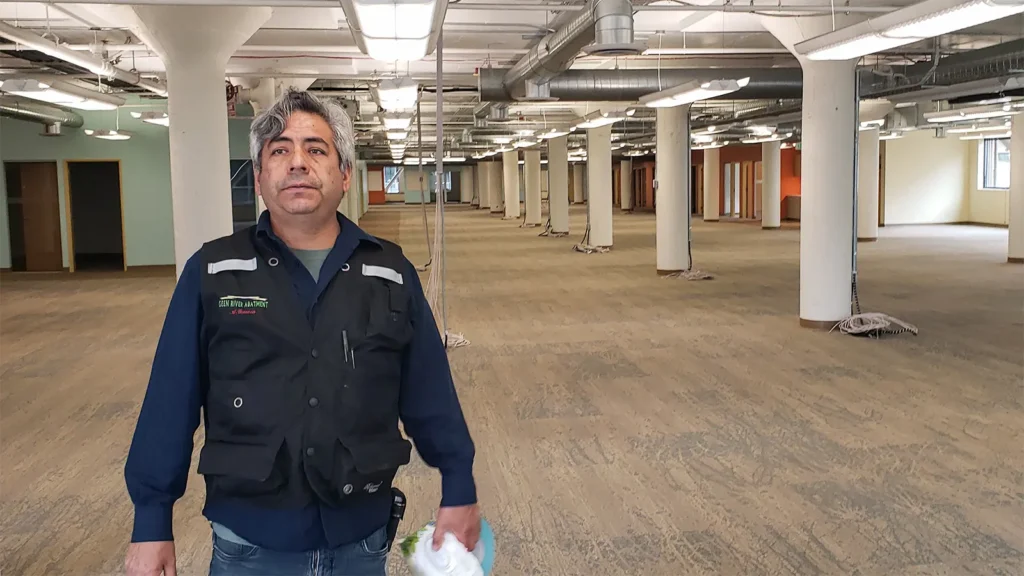
An AHERA certified inspector inspects the areas your project will affect, identifies materials likely to contain asbestos, and collects samples for analysis at an accredited lab. Your report documents the scope of work it covers, whether that’s a single room, a remodel, or a full demolition, where each sample was taken, the condition of the materials found, and the lab result for every sample. Washington requires it before work starts. Keep a copy on site for the length of the project, because an L&I or clean air agency inspector will ask for it, and give a copy to any contractor bidding the work before they bid. We send yours as a PDF so you can pull it up on your phone or print.
Please check our pricing for current survey and sample costs, along with standard and rush turnaround times.
What drives the price is the number of samples, and that comes down to your scope of work. These are low-end minimums, not maximums:
Those assume a single layer of materials. Multiple layers change the math. Two layers of flooring, or drywall over plaster, means each layer has to be sampled separately, and each one needs multiple samples to get an accurate reading. A home with several layers can run 40 or more samples.
The exact count is up to the inspector’s judgment once they’re on site. These are general guides, not a quote.
Depends on your scope of work. If the material is in good condition and your project won’t disturb it, it can often stay where it is. Flooring, for example, can sometimes be covered with a new layer on top as long as nothing cuts into what’s underneath.
If your work will disturb it, it has to be removed by a licensed abatement contractor before that part of the job can move forward. For a full demolition, the material has to be abated before the demolition permit gets issued.
A DIY kit lets a homeowner find out whether a material contains asbestos for their own knowledge. It is not a good faith survey, which L&I requires once a contractor is involved. You have to provide the results before work starts, and most contractors won’t accept a kit result.
There are practical limits too. Asbestos was added to hundreds of building materials, many out of plain sight, like caulking, sealants, gaskets, and anything behind walls or above ceilings. Knowing what to sample is most of the job.
Sample count matters. One negative doesn’t clear a material. That material needed samples from several areas, and one positive means the whole thing is treated as asbestos containing.
How the sample gets collected matters just as much. Samples are taken wet, and tools get cleaned between every material. If you cut into something that contains asbestos and then use the same blade on your next sample, you have carried fibers over. Now that second material will likely come back as a false positive, and you are paying to abate something that never needed it.
If your work will disturb a suspect material, yes. Kitchen and bathroom remodels, gutting a section of a home, replacing flooring or siding, and full demolitions all typically require one. Asbestos was used in hundreds of building materials, from popcorn ceilings and vinyl flooring to window putty, pipe insulation, cement siding, and fireproof doors.
Failure to have a survey done can result in a Labor and Industries compliance officer ticketing up to $600 a day, and that fine applies to both the homeowner and the contractor.
One warning on DIY test kits. In our experience most contractors won’t accept one. If a material gets tested wrong and turns out to contain asbestos after the crew has already disturbed it, that’s their exposure and their liability. They’d rather have samples taken by a certified inspector so the results hold up if it ever comes down to a dispute.
Sample analysis comes back in 3 business days on standard turnaround, or the next business day on rush.
The report is a separate step. Once the analysis is in, we communicate the results to you so you can start planning, whether that means lining up an abatement contractor or knowing you’re clear to proceed. The written report follows. On a small scope it’s quick. On a large survey with a lot of samples, expect an extra day or two to put everything together.
The site visit itself usually takes about 2 hours. Larger scopes or hard-to-reach spaces can push that to 4 hours or more.
Analysis turnaround runs on business days, so samples submitted late in the week land after the weekend. If your project is on a clock, tell us when you schedule.
Check the pricing section for current turnaround options and costs.
L&I puts the responsibility on the homeowner, building owner, or property manager acting as the owner’s agent to have a good faith inspection done and give the results to the contractor before work starts.
Work shouldn’t begin until that report has been handed over. If it isn’t, both the contractor and the property owner can be cited. Assuming your contractor is handling it, or that it’s buried somewhere in their scope, is a common way projects end up started without one.
Most reputable contractors know the rule and will ask you for it before they schedule the job
Yes, if your project will disturb a suspect material. According to L&I, there is no cutoff year that exempts a building from the survey requirement. Asbestos has not been banned in the United States and can still be found in new building products, so even recently built homes can contain asbestos containing materials.
Age changes the odds, not the legal requirement. A 1955 house is far more likely to turn up positive than a 2015 house. But the rule doesn’t run on when the house was built. It runs on whether the materials your project touches contain asbestos, and the only way to know that is to sample them and have a lab analyze the results.
If you’re renovating, demolishing, or hiring a contractor for work that could disturb possible asbestos containing materials, you need a survey regardless of the build year. The alternative is to assume the materials contain asbestos and handle them accordingly, which means following the full abatement rules on any disturbed material.
Book your visit online. We’ll confirm the time, come out and test, and send you a written report for your project.